
What is a Personal Brand?
A personal brand is the intentional way you present your skills, values, personality, and goals across digital platforms. It goes far beyond posting content. It reflects four core components:
• How you want people to perceive you
• What you consistently talk about or create
• The value you offer to others
• The proof that you’re growing in your field
When your brand is clear, someone should be able to answer: who you are, what you do, what you care about, and why you’re worth remembering.
Benefits of having a Strong Personal Brand Online
A personal brand matters because it’s how people perceive and remember you professionally. Here’s why it’s so important: It sets you apart In a crowded market, your personal brand shows what makes you unique. It’s not just what you but it’s how you do it and why it matters. It builds trust faster When you’re consistent in how you present yourself, people know what to expect. That consistency creates credibility and makes it easier for opportunities to find you. It opens doors A strong personal brand attracts the right clients, employers, collaborators, and opportunities. People hire people they know, like, and trust in which your brand helps establish all three. It increases your value When you’re known for something specific, you can command higher rates and better opportunities. You’re not just another option—you’re the option for what you do. It gives you control Without a personal brand, others define you. With one, you control your narrative and how you’re perceived in your industry. It creates connection Your brand helps the right people find and relate to you. It attracts those who share your values and need exactly what you offer.
Think of it this way: you already have a personal brand it’s what people say about you when you’re not in the room. The question is whether you’re building it intentionally or leaving it to chance.
What Your Personal Brand Should Include
These elements serve as the foundation of a strong, recognizable digital identity:
• A clear niche or focus area
• A defined tone and personality
• Core values that shape your decisions
• A consistent visual identity
• A portfolio that highlights your strengths
• Platforms that support your goals (LinkedIn, Instagram, Notion, portfolio site, etc.)
• Evidence of credibility such as projects, achievements, dashboards, or case studies
Steps to Create an Online Personal Brand
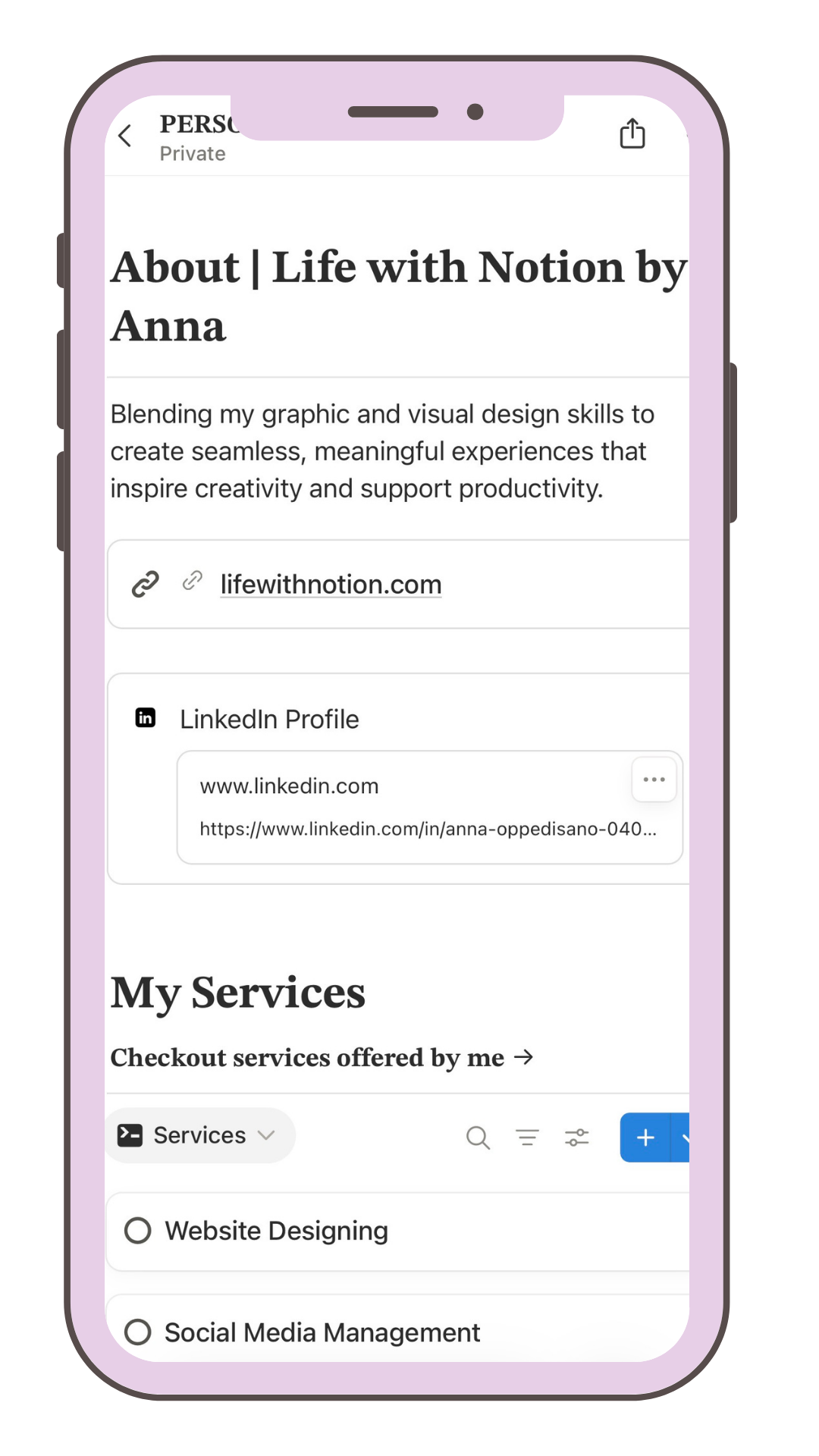
1. Introduce yourself
◉ Write a brief statement about what you do and what makes your work meaningful
◉ Add your website link and LinkedIn profile so people can learn more
◉ Upload your personal logo to establish visual identity
2. Define your services
◉ List the main ways you help others
◉ Keep each service clear and specific
◉ Add multiple services if you offer different areas of expertise
3. Identify your core values
◉ Choose two or three values that guide your work and decisions
◉ Keep it focused so your brand feels intentional
◉ Use this section to show personality and purpose
4. Highlight your tools
◉ Add the platforms, software, and systems you use regularly
◉ Mark your proficiency level (beginner, intermediate, expert, advanced)
◉ Show tools that reflect your strengths and working style
5. Outline your work experience
◉ Add your job titles, company names, and timeframes
◉ Keep descriptions concise and results-focused
◉ Show how each role connects to your current direction
6. Add your contact details
◉ Include your email and phone number for easy outreach
◉ Make sure these match what's on your website and social accounts
7. Build your skill set
◉ List your top three skills related to your brand
◉ Keep them short and action-driven
◉ Add only what reinforces your positioning
8. List certifications
◉ Add credentials that support your credibility
◉ Include the full certification name and issuing organization
9. Share your education
◉ Add your highest level of education and any relevant courses
◉ Keep this section simple and clean
10. Add hobbies and personal interests
◉ Share interests and passions that show authenticity
◉ Pick hobbies that highlight your personality and what inspires you
◉ Let people see your creative or professional energy outside of work
11. Showcase your work examples
◉ Create a portfolio section with your best projects
◉ Upload images or link to project pages
◉ Add a short description for context on each piece
◉ Keep only high-quality, on-brand examples
12. Review your template for consistency
◉ Make sure your tone, colors, and links match across every section
◉ Replace all placeholders with up-to-date information
◉ Keep everything clean, simple, and visually aligned
Discover Your Personal Brand Foundation
Not sure where to start with your personal brand? Take this quick five question quiz below to get clarity on your unique strengths, values, and positioning. In just a few seconds, you will uncover what makes you different, identify your core message, and receive personalized guidance on how to communicate your value effectively. You will discover insights that resonate with your authentic self. This is where you finally connect the dots between who you are and how to show up confidently in a way that attracts the opportunities you want.
Brand Identity Quiz
Discover your unique brand personality in 5 questions
Your Core Values
Your Brand Tone
Your Key Strengths
Your Visual Style
How to Grow Your Personal Brand Organically
Building a strong personal brand is the key to organic growth on social media and beyond. When you show up consistently with a clear message and authentic voice, people naturally gravitate toward you—they share your content, tag you in conversations, and recommend you to others without being asked. Your personal brand becomes a magnet that attracts the right audience, ideal clients, and collaborators who resonate with your values and expertise.
The power of organic personal brand growth lies in trust and genuine connection, not paid advertising or chasing algorithms. Every post, comment, and interaction reinforces who you are, what you stand for, and the value you provide. Over time, this creates a compound effect your online visibility expands, your authority and credibility deepen, and opportunities start coming to you instead of you chasing them.
The secret to growing your brand organically is consistency and authenticity. When people see the real you showing up regularly with valuable content, they don’t just follow you but they become loyal advocates who amplify your message. Focus on providing value, staying true to your unique voice, and showing up for your audience the growth will follow.
5 Tips to Optimize Your Content for Maximum Visibility (Without Paying for Ads)
Getting your personal brand in front of the right people doesn’t require a big advertising budget just smart optimization. When you strategically optimize your content for search engines and social platforms, you increase your chances of being discovered organically by people actively looking for what you offer.
1) Start with SEO-Friendly Content: Use keyword research tools to understand what your audience is searching for, then create content that answers those questions. Tools like Ubersuggest (free plan available), AnswerThePublic (shows real questions people ask), and Google Keyword Planner help you find high-impact keywords to naturally incorporate into your blog posts, social captions, and profiles.
2) Optimize Your Profiles and Bios: Your social media bios, LinkedIn headline, and website meta descriptions should include relevant keywords that describe what you do and who you help. This makes you discoverable when people search for expertise in your niche.
3) Leverage Free Analytics: Use Google Analytics and Google Search Console to track which content performs best and how people find you. Double down on what’s working.
4) Repurpose Content Across Platforms: Maximize reach by turning one piece of content into multiple formats. Canva (free version available) makes it easy to create graphics, carousels, and video snippets from your written content.
5) Use Hashtags Strategically: Research and use relevant hashtags to expand your reach on Instagram, LinkedIn, and Twitter. Tools like Hashtagify and RiteTag help you find trending and effective hashtags in your industry.

Anna Oppedisano
Lifestyle Content Creator
Hi, I’m Anna Oppedisano! I’m a lifestyle content creator and marketing student who loves helping people like you grow organically and build thriving online communities. I know firsthand how overwhelming the digital world can feel, which is why I’m passionate about breaking down personal branding and marketing into simple, actionable steps that actually work. My goal? To help you show up authentically, connect deeply with your audience, and create a brand that feels as good as it looks. Let’s grow together!